Interview
If AI has made one thing clear, it’s that the bar for what’s possible has moved.
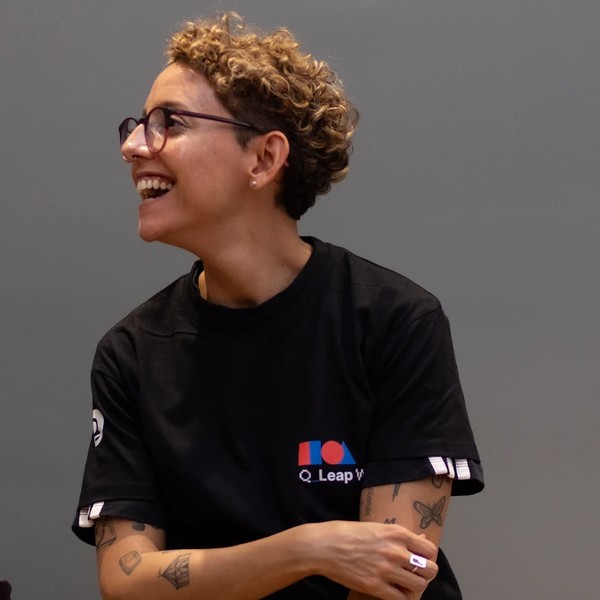
Carla Magris is People Manager at Qurable. She joined in 2025 with a clear challenge: build the People function from scratch, just as the company was starting to grow very fast.
Since then, she has laid the foundations of the function. She defined processes, implemented technology, automated tasks, and worked to raise the bar for leadership across the company.
We talked with her about how the team’s way of working reaches customers, what signals she looks for in an interview, and what has changed in what’s expected of a tech professional.
Values you can observe
Last year, Qurable broke its culture, its way of working and solving problems, down into concrete principles. Each one has observable behaviors associated with it.
The idea is that the company’s values don’t end up as a statement of intent full of nice phrases.
Cultural alignment is assessed even before someone joins. After that, it’s followed closely and is part of the performance review, which measures how well each person aligns with that culture.
The customer’s problem at the center
For Carla, how the team approaches and solves problems, how it collaborates, and how it engages with the customer’s problem has a direct impact on deliverables and on the business.
One of the company’s values puts it this way: “We engage with our customers’ problems.” It’s a call to put the customer at the center of the day, even in areas that aren’t directly related to sales or delivery. When someone takes ownership of that problem and understands the customer’s pain, and adds the experience of having worked with other customers, the solution can be much more tailored.
At some point, we can understand the problem even better than the customer does, because we see those pain points repeated across several customers.
Another value is being true owners of what they do: taking responsibility for results, accepting that they’ll make mistakes, learning from them, and understanding how each day’s work affects the customer.
From People, Carla admits, that connection is sometimes hard to see. But it’s there. If a hiring process brings in someone who isn’t aligned with the culture, or who doesn’t have the necessary experience or knowledge, that ends up affecting the experience customers have with Qurable.
The questions that reveal the why
Today, with AI, knowing how to ask questions is more important than ever.
In interviews, the People team asks a lot of questions and uses different methodologies to get to the core and understand each person’s real track record. But a few of them show how connected someone is to the purpose of their role:
- Whether they understand how their work affects a KPI, an OKR, or an organizational goal.
- Whether they bring proposals to improve the way they work.
- Whether they can adapt to change, which in companies is constant and cyclical, and which AI has accelerated even more. How flexible they are and how resilient.
From specialist to product engineer
The market is coming from a paradigm with a strong emphasis on technical specialization: the Node rock star, the Java rock star. For Carla, that alone is no longer enough.
Soft skills have always mattered, such as collaboration, autonomy, and adaptability. But now we also look for people who can lead, not just a team but themselves. People who ask questions that add value, who challenge the status quo and look for a new angle, with a strong customer focus.
If AI has made one thing clear, it’s that the bar for what’s possible has moved, and it keeps moving all the time.
Even in her own role, she says, she now handles tasks that used to be unthinkable. That’s why the ability to adapt to new responsibilities matters so much. And in tech, that shift has a name.
I think the engineer’s role is increasingly shifting toward that of a product engineer: not the person who gets a ticket and executes it, but the one who digs in to understand the business, the customer’s pain, and the product.
Connected at a distance
Qurable works mainly remotely. How do you make sure each person feels connected to the company’s purpose? Carla mentions several layers.
The first is a founding team fully involved in day-to-day work, which provides visibility into the business’s needs and immediate feedback on what works and what can be improved. The second is the quarterly Town Halls, where the team shares where the company is, where it’s headed, what the priorities are, and what’s expected of each person. The third is People working alongside leadership to help manage teams and correct course.
But the most important part happens day to day, and that’s where the leader’s role is key: how they set expectations, how often they talk with their team, how they communicate each person’s impact, how they define goals and, above all, how they give feedback. On growth, on results, and on behaviors: that cultural alignment from the start.
Broader roles, and more judgment
What’s next? For Carla, continuing down the path they’re already building. AI adoption is already in place, and the question now is how everything they do evolves and how each role adapts. The paradigm that’s starting to take hold is broader roles that handle things that weren’t even imaginable before.
She also puts the focus on communication: within teams, with customers, to ask questions, and also to prompt.
How impeccable we are with our words has a direct impact on how we interact with technology.
And she makes it clear that technical skills don’t lose weight, because that’s where judgment comes from. Specialization and the experience built over years still add a lot of value.
We’re not going to delegate 100% of decisions to a machine. Judgment and skills like decision-making are key, and we need to keep working on them.
The bar for what’s possible keeps moving. What doesn’t change is that people are still the ones making the decisions.
Frequently asked questions
With principles that have observable behaviors associated with them. They’re assessed before someone joins, followed day to day, and are part of the performance review.
How the team solves problems, collaborates, and engages with the customer’s problem has a direct impact on deliverables. Combined with experience from other customers, it makes it possible to deliver more tailored solutions.
People who understand how their work affects the company’s goals, who propose improvements, and who adapt flexibly to change.
Beyond technical knowledge, the ability to lead themselves, ask good questions, and focus on the customer. The role is shifting toward that of a product engineer, who understands the business and the product.
It makes them broader and makes communication more important, even for prompting. But the judgment to make decisions still belongs to people.
More conversations on loyalty and customer engagement on the blog