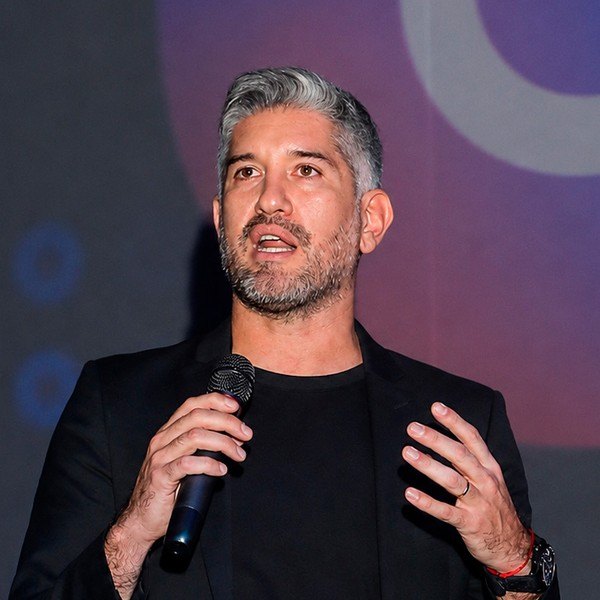
Federico García comes from the world of enterprise digital services. Together with Qurable's three other co-founders, he spent 10 to 20 years building mobile, web, cloud and, more recently, artificial intelligence solutions for B2B companies, mainly in retail and banking, across Argentina, Uruguay, Chile, Colombia, Mexico and the United States. That company, Lagash, was eventually acquired by Mercado Libre.
After the sale, Fede served as product lead and director for the mercadolibre.com marketplace and several of its verticals. There he learned how to use customer data to better reach what people want, need, look for and might end up buying. And one thought stuck with him: bringing that model to a bank or a traditional retailer is anything but easy.
We spoke with him about how Qurable got started, what he means by customer engagement, and where the relationship between brands and their customers is headed.
Knowing your customer is extremely costly
Mercado Libre is a platform with millions of users connected around dynamic purchasing. In a bank or a retailer, by contrast, data is highly fragmented. The customer lifecycle is split across the CRM, the online store and the ERP. And the moment of payment is usually disconnected from everything else, because the POS, the processor or the digital wallet each handle it on their own.
With that setup, understanding a customer is slow and expensive. That's the problem the team has specialized in over the past few years.
Today we offer a platform that helps both small and large companies get to know their customers better so they can sell more, with greater repeat business, delivering the product customers actually want at the exact moment they want it.
One vision, several pivots
Qurable hasn't always done what it does today. The vision has always been the same, building technology that helps companies connect better with their consumers, but the product changed quite a bit along the way.
At first it was a B2C product that used blockchain to create an “anonymous, but not that anonymous” bond between a person and a brand. Establishing a B2C platform was going to take a long time, and the team had years of B2B experience. On top of that, conversations with clients always ended in the same place: how to use data to sell more to each customer.
In 2023 they went all-in on loyalty. The first thing they solved was tokenizing the liability that loyalty programs generate, something that works very well in closed schemes like airline miles. But not every program has miles or points, so they adapted the product to run both on-chain and off-chain. In 2024 it became an all-in-one platform to segment users, launch tiers, create gamification mechanics and add experiences like spin-the-wheel or scratch cards, which resonate with younger generations.
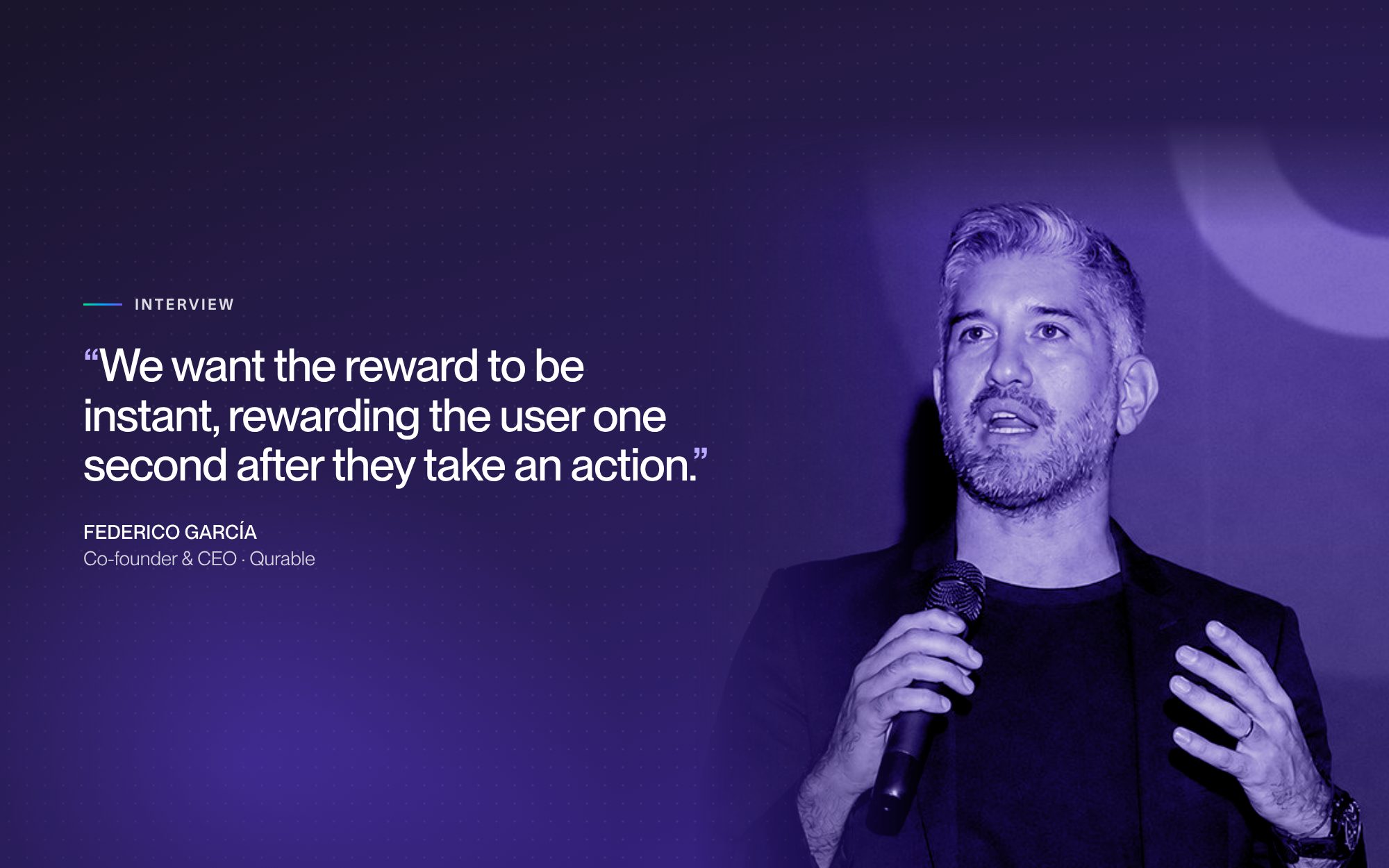
We want the reward to be instant, rewarding the user one second after they take an action instead of making them wait days.
Then came two more pieces. The first is artificial intelligence. People used to process the data and think in terms of audiences. Today AI agents process far more information and make it possible to speak to each user individually, understand how they're behaving at a given moment and choose the best channel to reach them, whether push, WhatsApp or email. The second is the transaction: coupons, cashback for issuers and wallets, and the ability to decide in real time which benefit to give someone who is paying with their card at a merchant.
The goal is for the customer, across their entire lifecycle, to buy more, more often, and the product they're looking for. But also the one that makes sense for the company, for example one that's about to expire.
Everyone does loyalty
For Fede, every company does loyalty, each with the resources it has.
If you look at the micro-influencer building their community, they're doing loyalty, and when you look at a mega-company like Bank of America or American Airlines, they're doing loyalty too.
That's why in 2025 they modularized the platform, to reach not only large enterprises but also SMBs across Latin America. Today they work mainly in three verticals: airlines and hospitality, retail in the broadest sense, and fintech and payments. In retail the challenge is a huge long tail of customers, and what changes is frequency. Nobody changes their phone every week, but people fill up on gas all the time. In payments, where they work with Modo, Pomelo, Banco de Chile and Santander, among others, the question is how to give the customer value at the moment of payment to stand out from the bank or wallet next door, in a market where users are less and less loyal.
In every case, two metrics matter: frequency and average ticket. And this is where something Fede considers key comes in. Each company only knows its own customer. The airline knows its frequent flyer and the gas station knows who fills up there. When Santander launches a promotion with McDonald's, how does McDonald's know that the customer coming from the bank is the right one? Qurable connects those companies so the data gets enriched.
In the end, it's like having information superpowers that let you build a bigger, better relationship with a specific customer.
What customer engagement is
Fede explains it through the evolution of the past 15 to 20 years. First, data lived in the big CRMs and ERPs, like Salesforce, Dynamics or SAP, “old elephants” with fairly static information. Then came dozens of SaaS platforms, each solving a single thing: promotions, cashback or messaging. The result is that a large company today needs three to five platforms to cover its customer lifecycle. And even then, data and channel aren't enough.
If your product or service is a match for someone, how do I get that person to come to your physical or digital store? The way to create that engagement is to be top of mind for that user all the time.
For that, he looks closely at Asia. He believes Asian consumers are five to seven years ahead of Latin American ones, and when he compares how Shopee and Mercado Libre approach hyper-personalization and gamification, he sees a very big gap. Meanwhile, many ecommerce platforms are still used to list products and handle checkout. The real challenge is something else: getting the customer to buy, in a single click, the sneaker they were looking at the moment they walked in.
An everyday example came up during the conversation. Someone who doesn't eat burgers gets burger promo notifications every Friday night. According to Fede, that doesn't just fail to create engagement, it does the opposite. And the brand sending them invests millions in that distribution. The problem is that it segments in a very basic way: at some point someone tapped on a burger from that phone (maybe it was someone else) and it's assumed they still like them.
We call it a touchpoint, but it has to be the right touchpoint: for the right person, at the right moment and through the right channel.
A digital twin for every customer
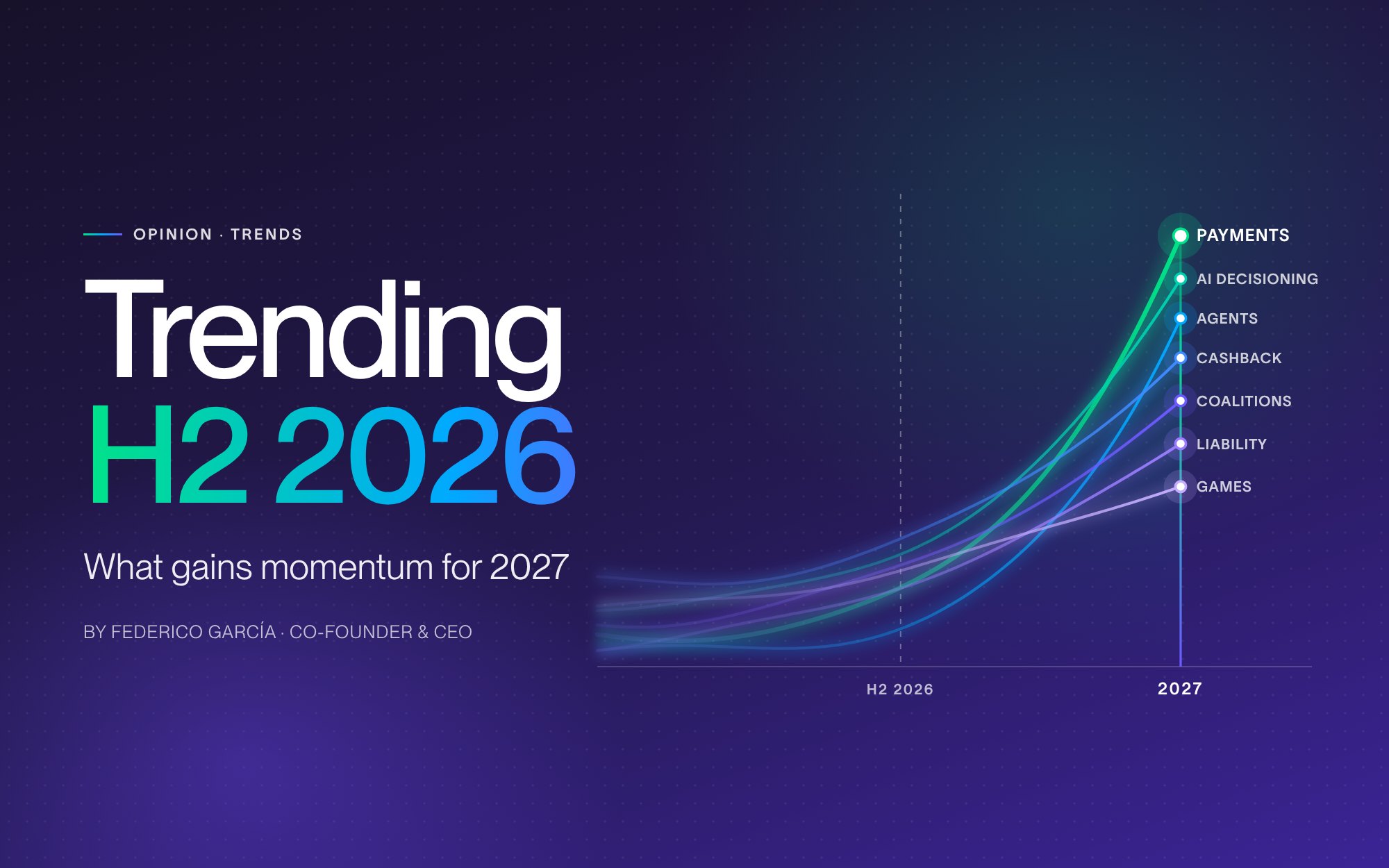
So where is all this headed? Fede admits that 15 months ago he would have given a different answer. Today he believes everything runs through artificial intelligence, and that in payments and commerce agents will play a central role, to the point of paying or buying on our behalf.
It's no longer enough to just be a cloud platform or an API-first platform. Now technologies need to be ready for agent-to-agent conversations.
He envisions each person's data living in their own agent, a kind of digital twin, and the famous social media algorithm extending to other business models. Most traditional companies aren't ready. Their data is still fragmented and processed in batches, 24 hours later, while an agent operates around the clock. In engagement, the winners will be those who manage to anticipate: knowing what the user is looking for, what their complementary product is and how to offer an “A++” to someone who bought “A” a month ago.
Embrace AI, and fast
To close, we asked him what his biggest challenge is as CEO. He says it's the same one every company faces, tech or not: how to embrace artificial intelligence and what value to assign it. Many see it as a threat, with the familiar “we're all going to lose our jobs.” He sees a huge opportunity, with one condition. An industry used to take years to transform. Today it happens in months, or even days.
The main challenge is to embrace the technology very quickly, learn, pivot and fail, because this is moving at an extremely fast pace.
The speed changes, but the core remains the same as throughout the conversation: data, and how to use it at the right moment.
Frequently asked questions
It's how you stay top of mind with customers so they come back to your physical or digital store. It requires the right touchpoint: the right person, at the right moment, through the right channel.
Because data is scattered across the CRM, ecommerce and the ERP, and the moment of payment is disconnected from everything else. On top of that, it's usually processed in batches, with a one-day delay.
Audiences group thousands of users by basic criteria. Hyper-personalization, powered by AI agents, understands each customer at a given moment and chooses the best channel to reach them.
Three verticals: airlines and hospitality, retail, and fintech and payments. In all of them, the goal is to increase purchase frequency and average ticket.
Each person will have their own agent that can buy and pay on their behalf. Platforms will need to be ready for agent-to-agent conversations and to use data in real time.
More conversations on loyalty and customer engagement in the Blog