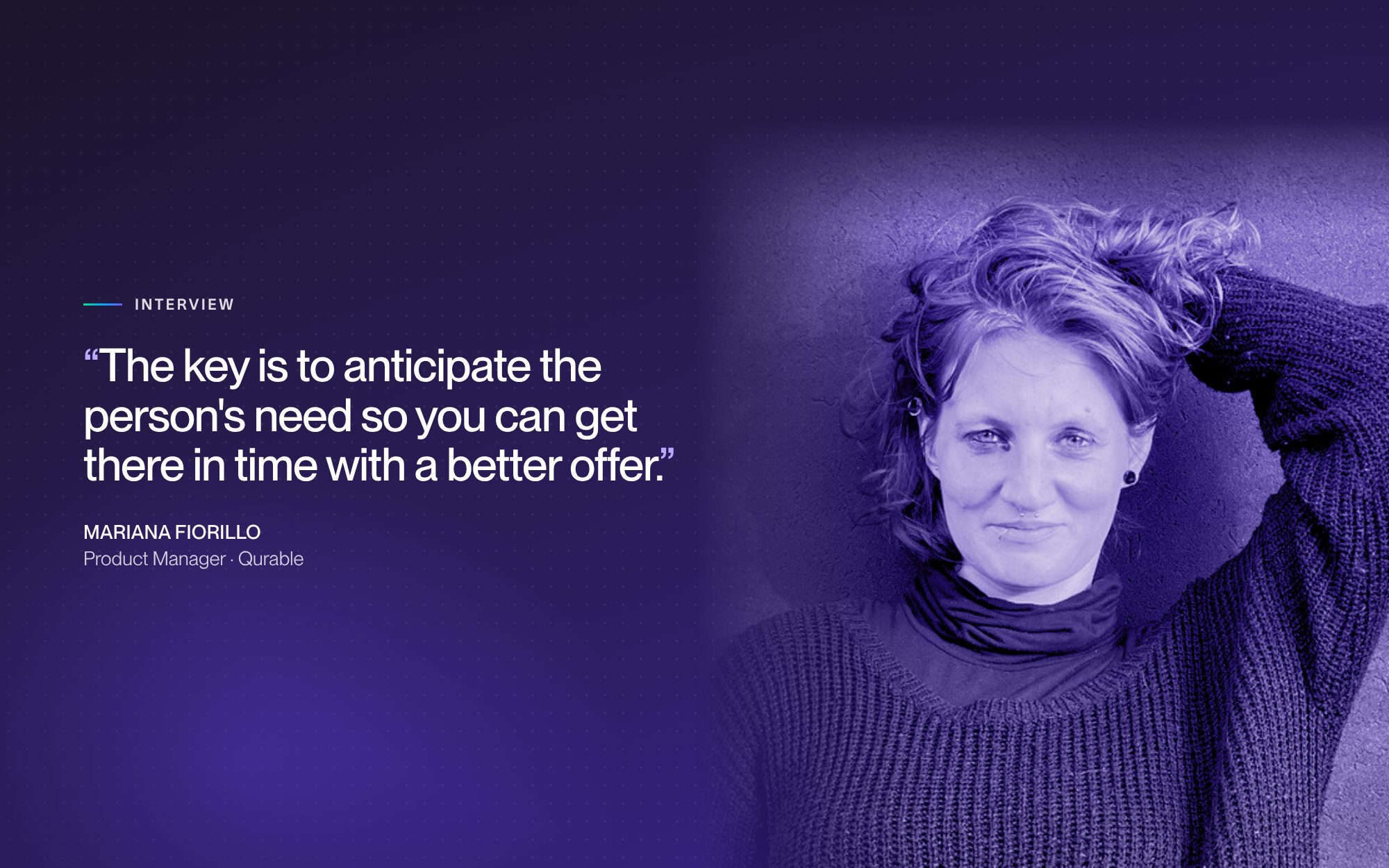

Mariana Fiorillo is a Product Manager at Qurable, where she works on the product's discovery phase. That means working side by side with customers every day to understand what they need, where the friction is, and how to help them grow their business.
Her team's goal is to help brands build engagement with their own customers from the very first payment. We talked with her about what it means to think in ecosystems and what a brand can do when it truly knows its customers.
Data that never gets connected
Brands receive customer information from many places: when people pay, when they buy in store, when they interact through a channel. The problem, according to Mariana, is that this data isn't connected, and without that, there is no way to truly personalize the offer.
That is where the idea of an ecosystem comes in. It's not just about understanding what a person does with one brand, but how they move across several.
When we talk about understanding the ecosystem, we mean understanding the movements, identifying these people and seeing how they move not just through one brand, but across multiple brands.
That understanding is what makes it possible to personalize the offer, and that is what gets the person engaged and gives them a unique experience.
From running shoes to a race
To make it concrete, Mariana offers an example. Father's Day is coming up, and someone who is worried about their dad's health decides to invite him to run a race together. They give him a pair of running shoes as a gift, and he goes to buy them.
But the story doesn't end there. To train, the dad looks for a gym nearby, because besides running he wants to work out on the treadmill. Later on he needs compression socks, and makes another purchase. That's several brands and several moments, and each one says something about the same person.
By identifying his habits and his journey, we can understand which offer would matter to him and give him the best possible option.
The ecosystem aims to understand the person at each of those touchpoints: what they did, what they bought in store, what they were given or which coupon they redeemed.
What a brand does with a 360-degree view
With that complete view, a brand can know what a person does on a Saturday afternoon or during the week, and personalize in depth. That has a direct impact on two metrics: average ticket and purchase frequency.
For Mariana, the most interesting part comes next. What you learn from one customer can be applied to others with similar profiles.
The key is to anticipate the person's need so you can get there in time with a better offer.
It's the same idea that guides her work with Qurable's customers: understand first, so you can offer better.
Frequently asked questions
It is a perspective that looks at how a person moves across several brands, not just within one. Connecting that data makes it possible to personalize the offer.
Because they have customer information across different channels, such as payments or in-store purchases, but it isn't connected.
It means knowing a person's full journey, their habits and what they do at different moments, in order to understand which offer matters to them.
It helps increase average ticket and purchase frequency, and lets the brand apply what it learns to customers with similar profiles.
More conversations on loyalty and customer engagement in the Blog