
Federico García comes from the world of digital services for enterprises. With the other Qurable co-founders he built Lagash, a company later acquired by Mercado Libre, where he went on to lead product for the mercadolibre.com marketplace.
On April 30, 2026, American Express launched the most significant refresh of its Gold Card in a decade. The changes are deliberate: dining credits expanded to high-accessibility chains, Hertz status, 5X points on prepaid hotels via Amex Travel, and a credit of up to $96 for Uber One. None of these benefits is a deferred, accruable point. All of them intercept the consumer at specific moments in daily life — dinner, travel, coffee, the commute.
The logic is not about reward. It's about presence.
A points program promises future value. A lifestyle platform delivers value now. American Express has crossed that line clearly: its $16.6 billion invested in rewards in 2024 — more than double what it collected in card fees — is recovered through merchant fees because cardholders use the card at every relevant moment of their day. Engagement is the business model, not the accessory.
High-value engagement is not built on points — it's built on moments
The Gold Card reconfiguration illustrates a principle that retail, banking, and travel organizations in LATAM must internalize: consumers don't differentiate between loyalty and engagement. They experience value — or they don't. And the highest receptivity window occurs at the moment of the transaction, not in the inbox that arrives hours later.
Companies that design their engagement strategy around present moments — rather than future promises — will capture a disproportionate share of consumer spending. The Deloitte 2026 data confirms it: 72% of consumers say loyalty programs make them more likely to spend with their preferred brand. But only when they feel the value is immediate and relevant to their lives.
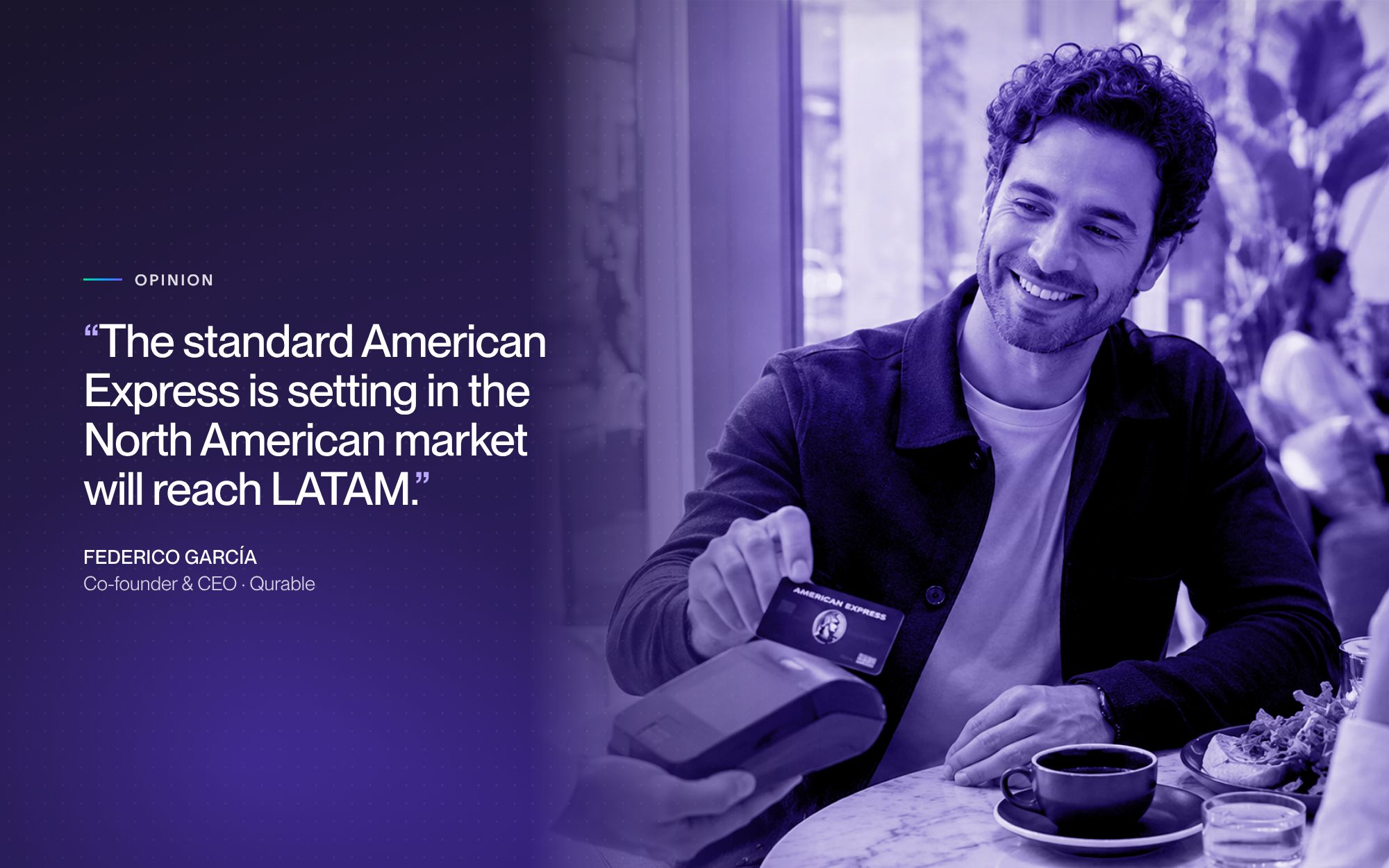
The standard American Express is setting in the North American market will reach LATAM. Organizations that build that capability today will have a structural advantage when that standard becomes market expectation.
How Qurable operationalizes this model
The American Express move codifies precisely what Qurable operationalizes for the LATAM market: the transition from the deferred-reward model to the present-value model at the exact moment of the transaction.
AmEx invests $16.6 billion to guarantee presence at every relevant consumer moment — dinner, travel, the commute. AmEx's advantage is its merchant network and global negotiating power. Qurable's advantage is the architecture: being integrated in the payment rail, where that moment of presence occurs naturally, without requiring AmEx's budget or network.
The standard AmEx is building globally does not require AmEx's budget to replicate in LATAM. It requires the right architecture.
Frequently asked questions
It extended dining credits to highly accessible chains, added Hertz status, 5X points on prepaid hotels through Amex Travel and a credit of up to $96 for Uber One.
A points program promises value in the future. A lifestyle platform delivers value in the present, in the relevant moments of the consumer’s day.
Because it is the consumer’s window of highest receptivity, unlike the inbox that arrives hours later.
With a platform built into the payment rail that delivers value at the moment of purchase, on top of the customer base the organization already has.